Essay 03
E. Buoncore
27 June 2026 · 6 min read
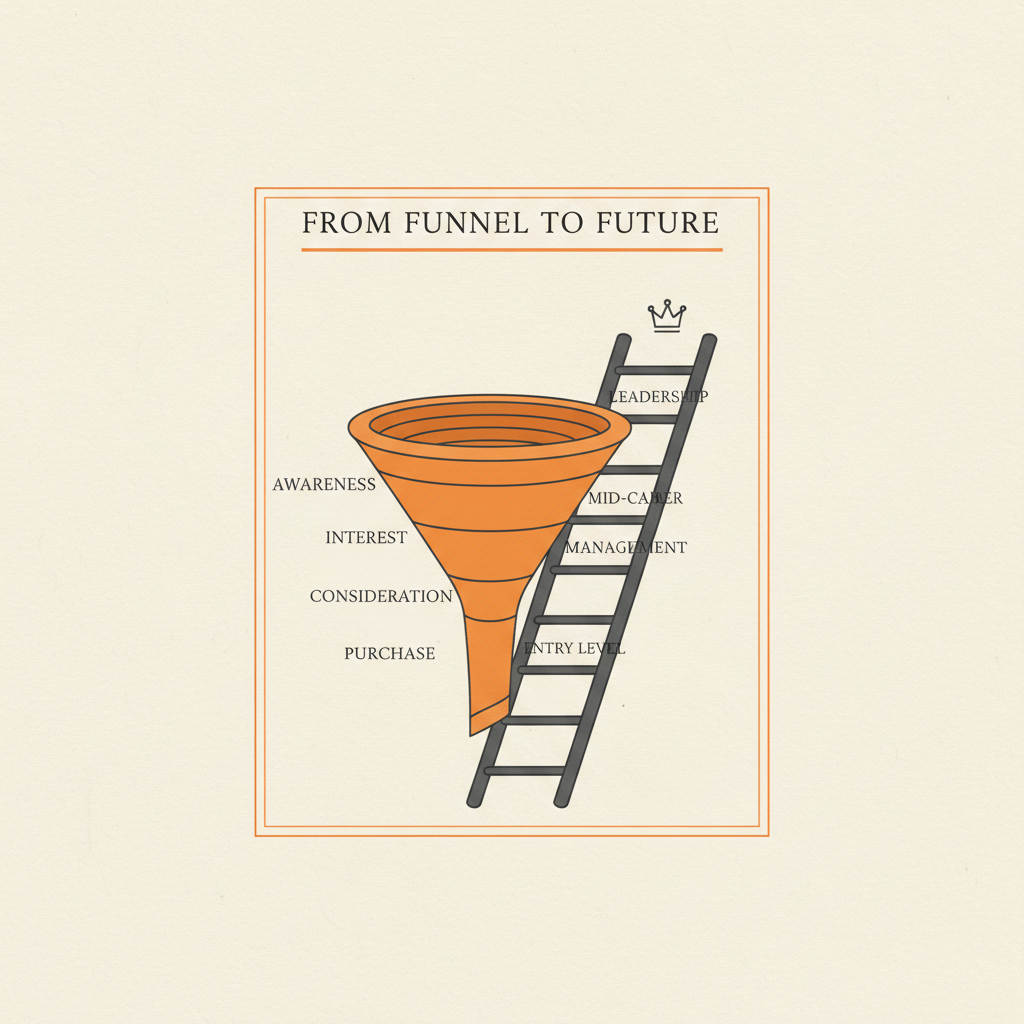
What Marketing Taught Me About Executive Hiring
For more than twenty years, I worked in brand management. I launched more than 100 products across beauty, fragrance, fashion and consumer goods. P&G. Reuters. Hugo Boss. Dolce & Gabbana. Different industries. Different consumers. Different markets. But every launch began with exactly the same question. Not: "What do we want to say?" Instead: Who are we talking to? What problem are they trying to solve? What do they already believe? What do they need to hear before they'll choose us? Only then did we build the message. Never the other way around.
That is the discipline of brand management. You don't start with the product. You start with the customer. And once you understand the customer, something interesting happens. The message almost writes itself.
Years later, I moved from positioning products to advising executives. And I noticed something that puzzled me. Almost everyone started in the opposite place. The first conversation was usually about rewriting a CV. Updating LinkedIn. Preparing interview answers. Improving an elevator pitch. In other words... They started with themselves. Their experience. Their achievements. Their story. It felt familiar. But backwards. Because that's not how we launched products. And it isn't how companies make hiring decisions either.

Companies don't wake up thinking: "Let's hire someone with twenty years of experience." They wake up thinking: "We need to enter a new market." "Growth has slowed." "This transformation is failing." "Our customers no longer trust us." "We need someone to build this business." The executive is not the starting point. The business problem is. That was my breakthrough.
Everything I had learned about positioning products suddenly applied to executive careers. The first question wasn't: Who are you? It was: What change is the company trying to create? Only then does the next question matter. Can you prove you've created that kind of change before?
That's positioning. Not rewriting. Not personal branding. Not storytelling. Diagnosis. It starts by understanding the market. Then identifying the mandate. Then selecting the evidence that best answers it. The pitch comes last. Not first.
After more than 900 hours of executive advisory work, I realised the executives who struggled weren't usually less capable. They were less clear. Their value wasn't difficult. It was difficult to understand. And in hiring, clarity matters. Not because companies want simple executives. Because every hiring decision is made under uncertainty. The easier you make the decision, the easier you become to choose.
That observation eventually became the Business Archetype Framework. And later, Arcline. A structured way to diagnose the change a company needs, identify the change you've repeatedly created, and connect the two with evidence. Because that's what positioning really is. Not persuasion. Alignment.
Bet on Change Insight #14
Companies don't hire the best executive. They hire the executive they understand fastest.